

Does it bother you that people cover their faces with masks?
Do people behave worse when no one can see their faces?
Years ago, I owned a small business in an indoor shopping mall.
One thing I remember about the security guards was how they were trained to dress. They often wore sunglasses, even indoors, along with a vest or shirt bearing a badge or shield.
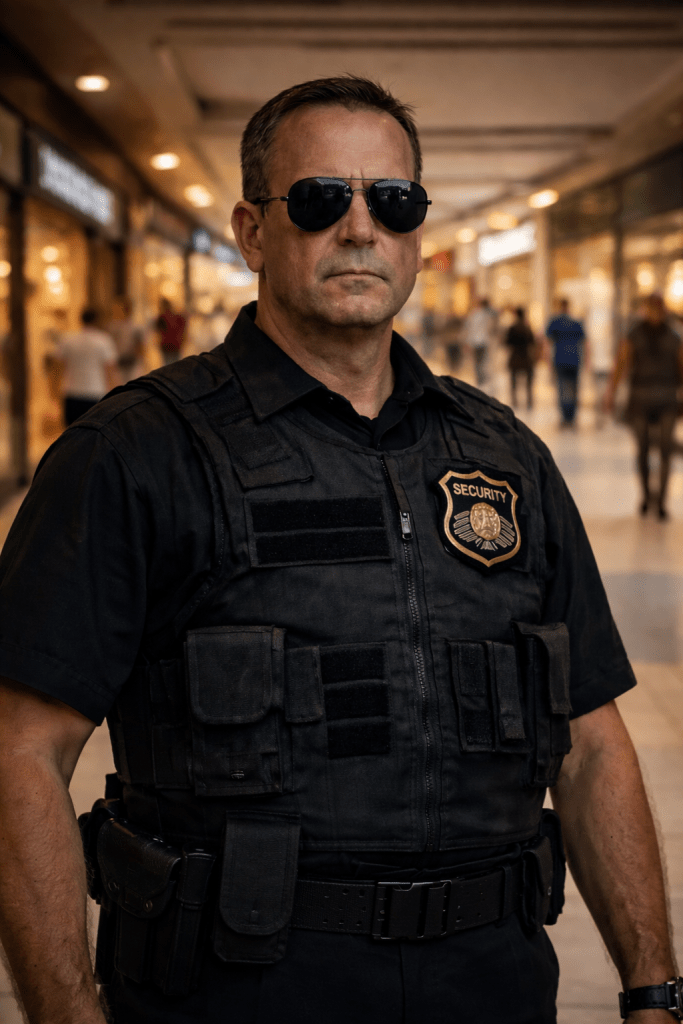
At the time, I assumed the reason was simple. The sunglasses and vest made them stand out from everyone else. It made them look official.
But lately I’ve been wondering if there was more to it than that.
Have you ever noticed how clothing or uniforms can change the way a person behaves?
I’ve been reading a book called The Lucifer Effect by Philip Zimbardo. It’s a long and fairly dense book, but it raises some interesting ideas about how people behave.
One of Zimbardo’s points is that people often act differently when they feel anonymous. In some experiments, participants wore sunglasses that hid their eyes. That small change sometimes made people behave more aggressively or selfishly.
Why would something as simple as hiding the eyes make a difference?
Zimbardo suggests that when people feel less visible, they sometimes feel less responsible for what they do.
He also talks about something many parents already suspect: children behave better when they think someone is watching them.
Are adults really that different?
That idea made me think again about those mall security guards.
Maybe the sunglasses and uniform weren’t only meant to change how shoppers saw them.
Maybe they also helped the guards see themselves differently.
Psychologists often say that people change their behavior when they adopt a role or a costume. A uniform can make someone feel more authoritative. Sunglasses can hide the eyes and create a sense of distance.
And it raises an interesting question.
Do we behave better when we feel seen?
When I was growing up in the 70s and 80s, someone walking around with their face covered would have seemed strange. Today, after 2020, it’s much more common. Sometimes it’s for health reasons, but sometimes it seems to be about privacy or hiding identity.
Does anonymity make it easier to act badly?
Or is that idea overstated?
What is the answer? Zimbardo’s research suggests there might be something to it, but human behavior is complicated.
Still, it’s an interesting thing to think about.
Do we behave differently when we feel hidden?

 Albert Alarcon Jr. | Author
Leave a comment