

When I was younger, I lived in Colma, California, just outside of Daly City near San Francisco. Colma is a strange place if you’ve never seen it before. It is filled with cemeteries. In fact, there are more dead people there than living ones.
I lived there twice as a child. Once when I was very young, around kindergarten age, and then again later when I was maybe eight or nine. Because of that, cemeteries never frightened me. They were simply part of the landscape. They were where we walked, where we wandered, where life happened.
I used to walk among the gravestones all the time.
You would see names carved into stone.
A person’s entire life reduced to something like:
Roger Smith
1931–1998
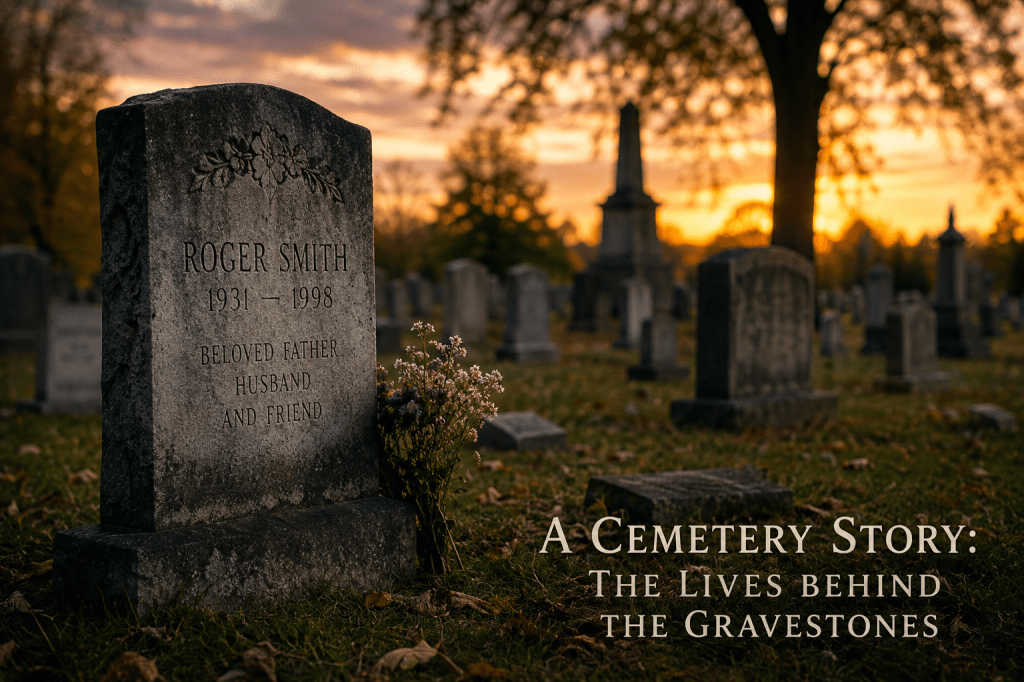
Maybe there would be a sentence underneath.
“Beloved father.”
“Gone but never forgotten.”
If the family had money, perhaps there would be a larger monument. A longer inscription. But even then, an entire human life would still only take up a paragraph or two.
And I think about that often.
Because no person fits into a paragraph.
Not really.
A person is not just a birth date and a death date. They are not a label. Not a category. Not a side in a conflict. A person means different things to different people. They have private fears, private hopes, unfinished dreams, regrets they never spoke aloud, moments of kindness no one saw, moments of weakness they carried alone.
A whole universe exists inside every human being.
And yet, when we tell stories, we often erase that.
I was thinking about this recently while considering writing a story about Rahab from the Bible, the prostitute who helps Joshua enter Jericho before the walls fall.
It would be a dark story. Probably darker than the kind of writing I usually do.
But what interests me is not only Rahab herself. It is everyone else.
All the unnamed people.
The children inside the walls. The old couples. The merchants. The friends Rahab laughed with. The people she grew up beside. The people who annoyed her. The people she loved. The people she barely noticed.
When we hear the story, most of us never think about them.
The walls fall, the city is destroyed, and our minds stay fixed on the heroes of the story because that is how stories are usually told. The important people are given names. The others become part of the scenery.
But they were still people.
And we do this constantly.
Not just in ancient stories, but in movies, television, and even real life.
A planet explodes in a science fiction film, and we only think about the main characters reacting to it. We do not think about the child playing ball ten minutes before the explosion. The elderly couple taking an evening walk. Someone cooking dinner. Someone worrying about rent. Someone falling in love for the first time.
In monster movies, entire cities collapse beneath Godzilla’s feet, but the destruction becomes spectacle. Background noise.
Even in westerns, perspective changes everything.
In one story, the rancher is the hero protecting what belongs to him. In another, the settler is the hero trying to survive against greed. We slide into whichever viewpoint the story asks us to follow, and everyone outside that viewpoint slowly stops feeling real to us.
But they are real.
Or at least, they would be if we met them ourselves.
And sometimes I think this same thing happens in real life when we watch the news.
People die somewhere far away, and after a few moments, the story moves on. Numbers replace faces. Categories replace human beings. We stop imagining lives and begin imagining sides.
But people are still people.
No matter what they believe.
No matter what religion they belong to.
No matter what color they are.
No matter what sexuality they have.
No matter their politics, their age, their sex, their wealth, or their failures.
People still laugh. Still grieve. Still love their children. Still lie awake at night worried about things. Still hope tomorrow will somehow be better than today.
There is something deeply unnatural, I think, about forgetting that.
And maybe that is part of why I wrote The Nature Within Us.
Because beneath all the labels and tribes and arguments, there is still a human being there.
Complicated. Imperfect. Afraid sometimes. Hopeful sometimes.
Just like us.
Thanks,
Al
Author of The Nature Within Us
 Albert Alarcon Jr. | Author
Leave a comment