


What Holds Love Together Over Time
I usually write about compassion and love in the broader human sense, the kind of love we might call brotherly or neighborly love, or simply the way we should try to treat one another. But today I want to talk about romantic love.
When I was younger, I used to read books by relationship experts. Some of them offered good advice. They could explain communication, attraction, conflict, and the hidden things people bring into a relationship. But every now and then, I would find out that the person giving the advice had been through several marriages. That always made me wonder. If they understood relationships so well, why couldn’t they always make their own relationships last?
I don’t say this to mock them. Life is harder than advice. Knowing what love requires is not the same as living it every day. A doctor can understand health and still neglect his own. A teacher can understand patience and still lose it at home. Knowing something and living it are not always the same. But I do think there is a reason some people can understand love and still struggle to hold onto it.
One of the best ideas I ever learned about romantic love did not come from one of those books. Oddly enough, I think I learned it in college, maybe even in an administration of justice class. We studied a lot of psychology in those classes, so maybe that is where it came from. The idea was the three-sided love triangle.
For romantic love to feel whole, it needs three sides. The first side is intimacy, not just physical but emotional. It is friendship, trust, honesty, and the ability to share your thoughts and feelings with someone without feeling foolish or unsafe. The second side is passion. That is the spark, the attraction, the desire, and the enjoyment of the other person. It is the part of love that makes us want to turn toward someone. The third side is commitment. That is loyalty, dedication, and the decision to keep choosing the relationship over time. The more I think about it, the more solid that idea seems to me.
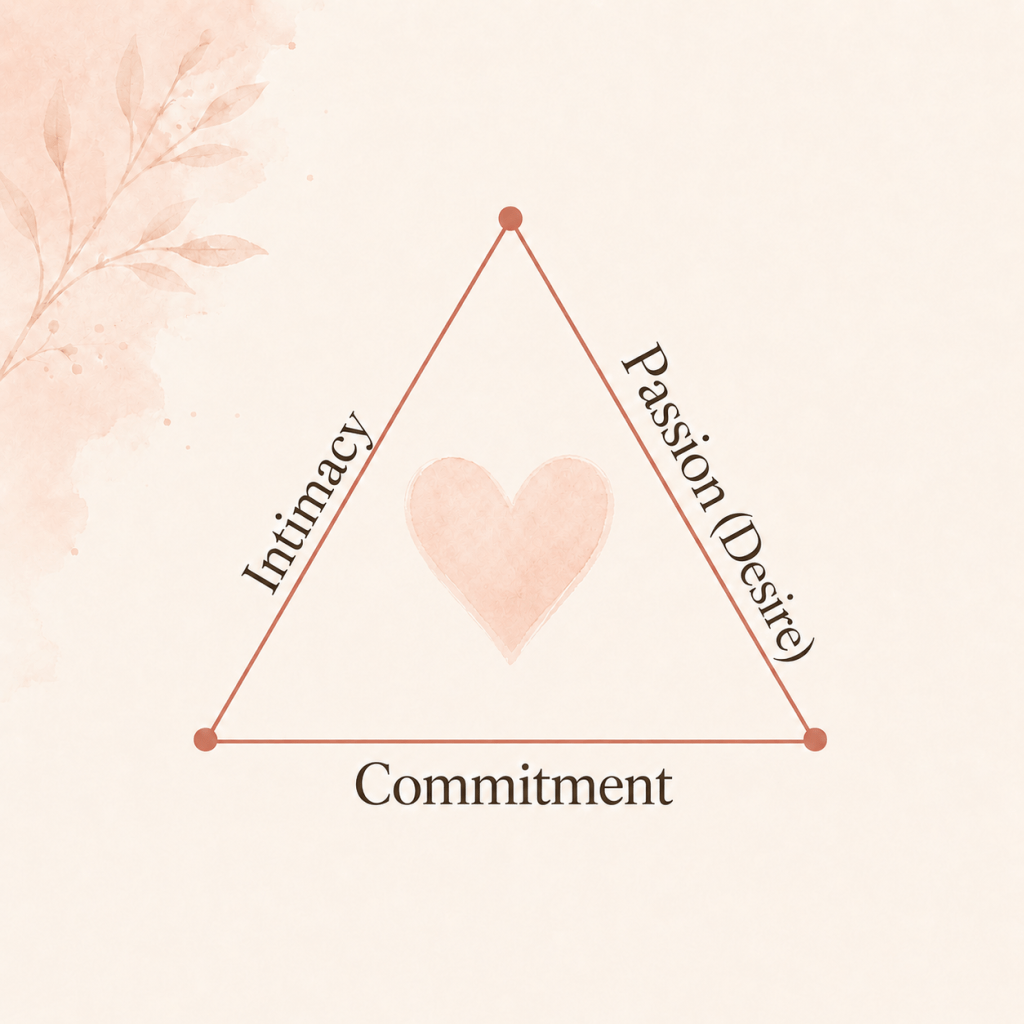
A relationship can sometimes survive with only two sides of the triangle. You can have friendship and commitment without much passion, and the relationship may still endure. You can have passion and intimacy without commitment, and it may feel powerful for a while. You can have passion and commitment without much emotional closeness, and maybe that can carry people for a time, too. But when one side is missing, the whole thing is unstable. And I think commitment may be the side that steadies the whole thing.
Of course, not every triangle is shaped the same. One person may have a very long wall of commitment. That can give a relationship a strong foundation. It may help people stay together through hardship, disappointment, sickness, money troubles, and the ordinary wear and tear of life. Another person may have a longer wall of intimacy. They may be very good at talking, listening, sharing, and being emotionally close. That matters too. A relationship without intimacy can start to feel lonely, even when two people are still living in the same house. And passion matters as well. We sometimes treat passion as if it only belongs to the beginning of love, but I don’t think that is quite right. You still have to like the person you are with. You still have to enjoy them in some way. You still have to want to turn toward them, not just remain beside them out of habit.
But this is where the question gets more complicated. A long relationship is not always the same as a happy one. When I travel, I sometimes meet older couples who have been married a long time. Some of them seem to come from a more traditional marriage, where the man appears to lead and the woman appears to follow. Maybe that worked for them. Maybe it didn’t. From the outside, it is hard to tell. They may have a commitment. They may have endurance. They may even have a kind of loyalty that many modern relationships lack. But are they happy?
That is a different question, and maybe that is what many relationship books are really trying to answer. They are not only asking, “How do people stay together?” They are also asking, “How do people stay together and still feel loved?” That is where communication comes in. But communication is not separate from the triangle. Communication belongs mostly to intimacy. It is how we let someone know us. It is how we repair things. It is how we say, “This hurt me,” or “I need you,” or “I am still here.”
And passion is not separate from friendship either. Desire may begin with attraction, but over time it has to include liking the person. Enjoying them. Laughing with them. Wanting to be near them, not only because of romance but because their presence still matters to you. So maybe the answer is not that the experts were wrong. Maybe they understood many important pieces. But understanding love is not the same as having all three sides of the triangle strong at the same time.
Maybe some people have intimacy and passion but not commitment. Maybe some people have commitment and intimacy, but the joy has faded. Maybe some people are deeply committed, yet they choose partners who are not. And maybe some relationships last because one person leans heavily on the other’s commitment. That may create endurance, but endurance alone is not the same as happiness.
So my advice is humble. I am not a relationship expert. I have not written the great book on marriage. I have only been married for thirty-six years, and even that does not mean I know everything. It just means I have had a long time to notice a few things.
And maybe the thing I would say is simply this: be aware of the triangle.
Be aware of how we love. Be aware of how the other person feels loved. Be aware of which wall is strong, which is weak, and which one we may have been taking for granted.
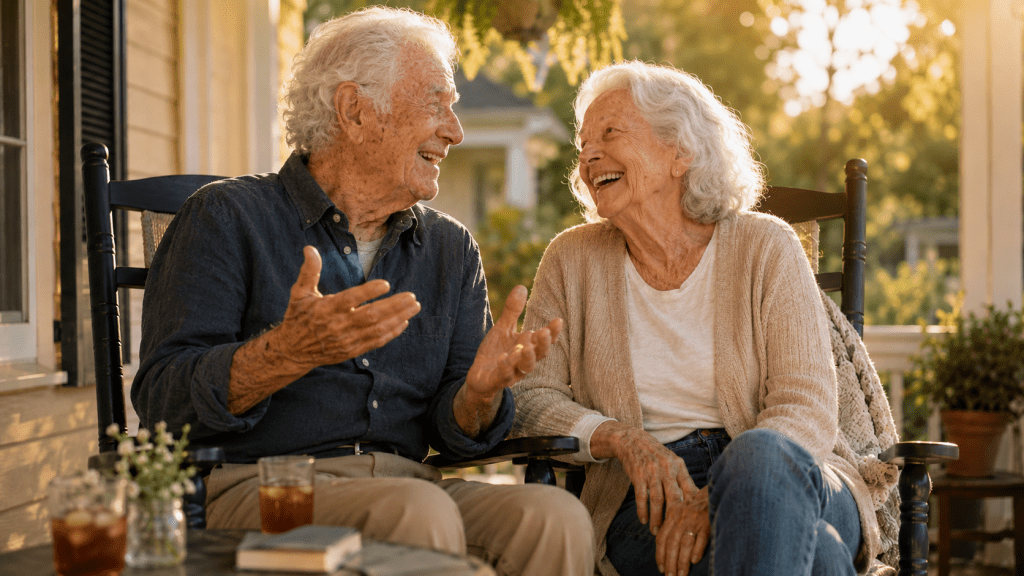
Our triangles do not have to match perfectly. One person may feel loved through loyalty, another through closeness, and another through affection, attention, and desire. The danger is assuming that the way we give love is automatically the way the other person feels loved.
Maybe romantic love is not just finding the right person and settling into something permanent. Maybe it is learning the shape of the love between us, noticing where the walls are strong, and caring enough to repair the places where they have begun to lean.
Because love may start as a feeling. But it survives through awareness.
Albert Jr
Author of The Nature Within Us
 Albert Alarcon Jr.
Leave a comment